Winning back lapsed members
How the Fitness pack reviews a lapsed member's visits, payments and notes, prompts a personal call and sends a comeback offer the club has approved.
By Achekam · · 4 min read · For Fitness businesses in South Africa, Nigeria, Kenya
Launching soon. The Industry CRM add-on described in this article is launching soon. This article describes it as it will work at launch.
Members rarely announce that they are leaving. They come less often, then stop coming, then stop paying, and by the time anyone notices, they have forgotten why they joined. Every club has a list of these people, usually in someone's head.
The good news is that a lapsed member already knows the club, the trainers and the way to the changing rooms. Bringing them back is often easier than persuading a stranger to walk in. What it takes is a review, a real conversation and an offer the club stands behind. The Fitness, wellness & spas pack in Achekam's Industry CRM has a workflow for exactly that.
Deciding who has lapsed
Start with a definition, because "lapsed" means different things to different clubs. For one, it is a member who has not visited for a while but is still paying. For another, it is someone whose membership ended and was not renewed. Write your definition down, so staff apply it the same way.
Two points shape it in the Fitness pack:
- Visits are recorded by staff. The pack does not read turnstiles, access control or class-booking systems. Your picture of who has stopped coming is only as good as the front desk's habit of recording visits. If that habit is patchy, fix it first.
- Freezes are not lapses. The pack keeps Memberships with their freezes. A member who has frozen their membership for an injury or a long trip has told you why they are away, and they should not get a win-back call.
Review before anyone picks up the phone
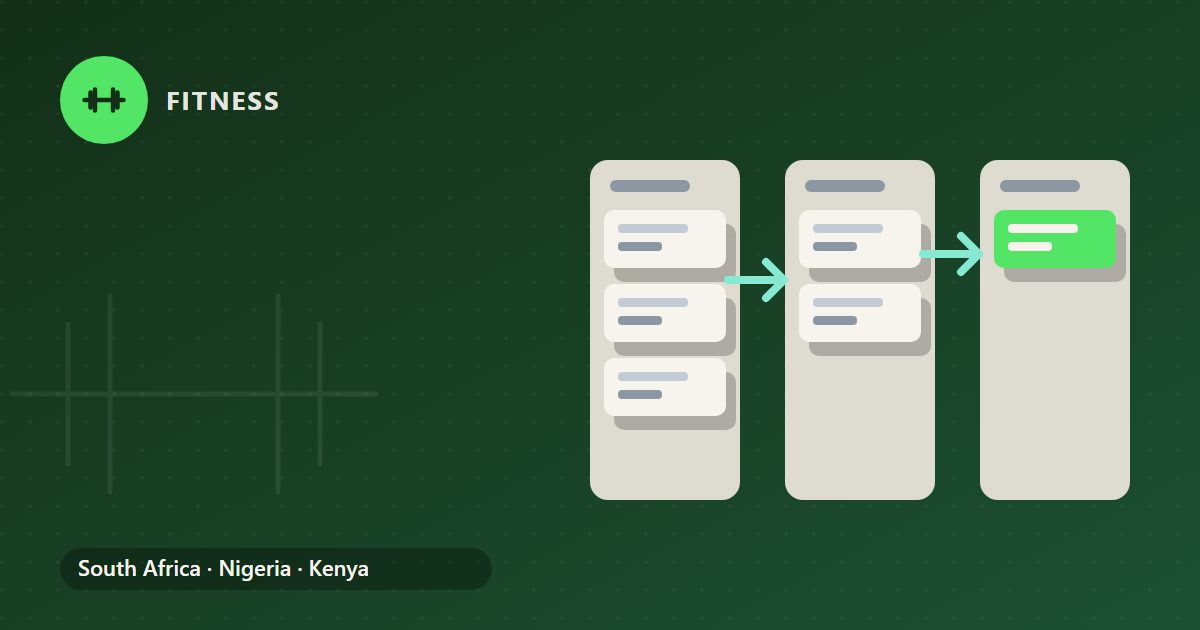
The lapsed-member workflow starts with a review of three things on the member's record: their visits, their payments and the notes staff have kept.
Each tells you something different:
| What you look at | What it may tell you |
|---|---|
| Visits | Whether they faded gradually or stopped suddenly, and which classes or times they used to come to |
| Payments | Whether they are still paying, fell behind, or stopped paying when they stopped visiting |
| Notes | Anything they said: a schedule change, an injury, a complaint about a class or a trainer |
That review changes the call. A member who stopped suddenly after a complaint needs an apology and a fix, not a discount. A member who drifted away over months may just need a reason and a time slot. A member who is still paying but not coming is at real risk of cancelling, and probably feels guilty about it.
The call
The workflow then gives a staff member a call to make. It is a task, with room for subtasks up to three levels deep, so a call that turns up more work (book a session with a trainer, correct an account, pass a complaint to the manager) keeps that work attached to the member.
Keep the call human:
- Say who you are and that you noticed they have not been in.
- Ask, and listen. Do not lead with an offer.
- If there is a problem you can fix, say what you will do and by when.
- If they would like to come back, agree a first visit: a day, a time, a class.
- Record the outcome on the member's record before the next call.
Some members will say they have moved on. Thank them, record it and let them go. A clean list is worth more than a long one.
An offer the club has approved
The last step sends a comeback offer, and the important words are the ones in the workflow itself: an offer the club has approved.
That rules out improvised discounts, where each staff member promises something different and the club finds out at billing time. Decide your offers in advance, for example a free week back, a reduced rejoining fee or a trainer session included, and decide who may offer which. The member then gets something clear and consistent, and the club knows what it is giving away.
Keep the offer modest and time-bound. The aim is to make the first visit back easy, not to train members to lapse so they can rejoin cheaply.
Mistakes that undo the effort
A few habits turn a good win-back programme into an irritation:
- Calling too soon. A member who missed two weeks for a holiday does not want a "we miss you" call.
- Leading with price. Offering a discount before listening tells the member the club cares about the fee, not about them.
- Calling the same person repeatedly. Once a member has said no, record it and respect it.
- Promising what the club cannot deliver. If the complaint was about a crowded class, do not promise it will be quieter unless it will.
Counting what works
The pack's home page shows counts drawn from the records, tasks and ledger themselves; none is typed in by hand. Counts of the kind it offers include records in a stage, overdue tasks and what was won this month. Used together, they show whether win-back calls are being made on time and whether lapsed members are moving back into active memberships.
Review the results monthly. If calls are made but nobody returns, look again at the offer and the call script. If calls are not being made, look at who owns them. Harvard Business Review's refresher on the value of keeping the right customers explains what a churn rate measures, why keeping customers costs less than winning new ones, and which customers are worth keeping.
Keeping members from lapsing
The best win-back is the one you never need. Members who are welcomed properly in their first month, as described in from trial visit to signed membership, lapse less often, and members on packages who are offered a timely renewal keep coming. Start with your definition of lapsed, run the review on your ten oldest cases, and make the calls this week.
General guidance only, not advice on your own circumstances. Tax and payroll rules change: check the current position with the authority or your adviser.
