Turning an enquiry into a consultation and a matter
How the Legal pack turns an enquiry into a client and a matter in one step, when a consultation becomes a matter, and where home-page counts come from.
By Achekam · · 5 min read · For Legal businesses in South Africa, Nigeria, Kenya
Launching soon. The Industry CRM add-on described in this article is launching soon. This article describes it as it will work at launch.
Legal work rarely arrives tidy. Someone phones about a dismissal, a neighbour's boundary wall or a late parent's estate, and that first conversation might be a quick chat, a paid consultation or the start of a full matter. Practices that record all three the same way end up with a client list full of people who never instructed them, or with paid consultations nobody can find a year later.
Achekam's Legal pack keeps those stages apart and names them in the practice's own language, so that each record is what it says it is.
Enquiries, consultations and matters: the words the pack uses
The pack uses a small set of words consistently:
- Enquiry: a person or company who has approached the practice but has not instructed it. This is the pack's word for a lead.
- Client: someone the practice acts for.
- Consultation: a meeting or advice session, which may or may not lead further.
- Matter: the main record of a piece of legal work, with its parties and court dates.
- Fee estimate: the pack's word for a quote.
Putting these words on the screens is not cosmetic. When a receptionist records an enquiry, nobody mistakes it for a client. When a partner opens the matter list, it holds only work the practice has taken on. And when a new member of staff joins, the screens already speak the way the practice speaks.
Converting an enquiry creates the client and the matter together
When an enquiry is ready to go further, you convert it. Conversion creates the client and the matter at the same moment and starts the matter's workflow. There is no separate step of creating a client and then remembering to open a matter, and no client record left without the work that justified creating it.
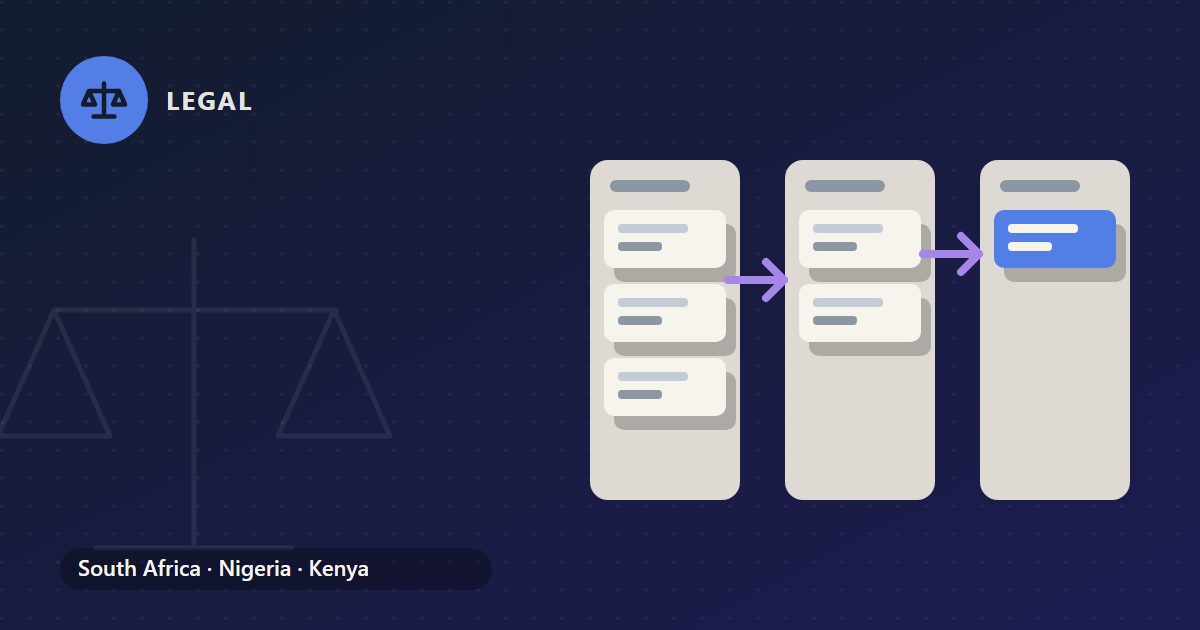
Because the workflow starts at conversion, the first tasks appear straight away. A matter begins at Intake and moves on to Conflict check, then Mandate signed, Active, Finalising, and finally Closed or Declined. The conflict check has to be done before the mandate can be signed, so converting early does not let anyone skip that step.
Convert when the practice is genuinely ready to act. An enquiry that is still being weighed up should stay an enquiry.
When a consultation becomes a matter
A consultation is its own kind of record, and it can become a matter. That fits a familiar pattern: a client pays for an initial consultation, receives advice, and only sometimes instructs the practice to go further.
Keep the consultation even when it leads nowhere. It records that advice was given, to whom, and when, and the names on it form part of the practice's history for future conflict checks. When a consultation does turn into a matter, the matter starts from what the consultation already holds rather than from a blank form, which saves retyping and reduces the chance of a misspelt name slipping into the conflict search.
A practical rule: decide which consultations are charged and which are free, and record both. A free first consultation is still a consultation, and the person you spoke to still told you about their affairs. For South African practices, the Law Society's POPIA guidelines for attorneys explain how the Act applies to attorneys and the conditions for lawfully processing client information.
Home-page counts drawn from the records themselves
The pack's home page shows counts such as:
- open records and records in each stage;
- pipeline value;
- overdue tasks and tasks due today;
- key dates in the next 7 days;
- won this month and revenue this month.
Every one comes from records, tasks or the ledger. None is typed in by hand.
That matters in a partners' meeting. If the home page shows a number of open enquiries, that is how many enquiry records exist, not someone's estimate. If a count looks wrong, the fix is in the underlying records, which keeps everyone honest about the state of the practice. The count of key dates in the coming week is a useful standing item on the agenda.
Changing industry later keeps every record
When a business switches the Industry CRM on, it picks one of twenty industries, and Legal services is one of them. A workspace runs one pack at a time. If it later switches to another industry, every record is kept, and each record keeps the pack it was made under.
For most law practices this will never come up. It matters for a business that runs a legal service alongside another trade, or a practice that changes direction: years of enquiries, consultations and matters are not lost because the workspace changed pack.
Setting up intake for the pack
| Decision | Who makes it |
|---|---|
| What reception captures on a first call | The practice manager |
| Which consultations are charged | The partners |
| When an enquiry is converted | The fee earner taking the matter |
| What a declined enquiry records | The partner who declined it |
Once these are agreed, train reception on the difference between an enquiry and a client. That single distinction is what keeps the client list clean.
A short script for the first call helps too. Reception should capture the caller's full name and contact details, the names of everyone else involved (the other party, a company and its directors, family members in an estate), what kind of matter it is, and how the caller heard of the practice. Those other names matter most: they are what the conflict check will search once the enquiry is converted, so a name left off at the first call is a name the search cannot find.
The step that follows conversion is the conflict check, described in running a conflict check before accepting a matter. For South African practices, the full intake sequence, including FICA documents and the signed mandate, is in opening a new matter: FICA, conflicts and mandate.
Agree the words with your staff before anything else. Once everyone calls things by the same name, the records stay accurate with very little policing.
General guidance only, not advice on your own circumstances. Tax and payroll rules change: check the current position with the authority or your adviser.
